06 February 2022

Unconventional Switch: Fridge Door Switch--David Trefry and Tyrell Whitby

  Fridge Door Switch

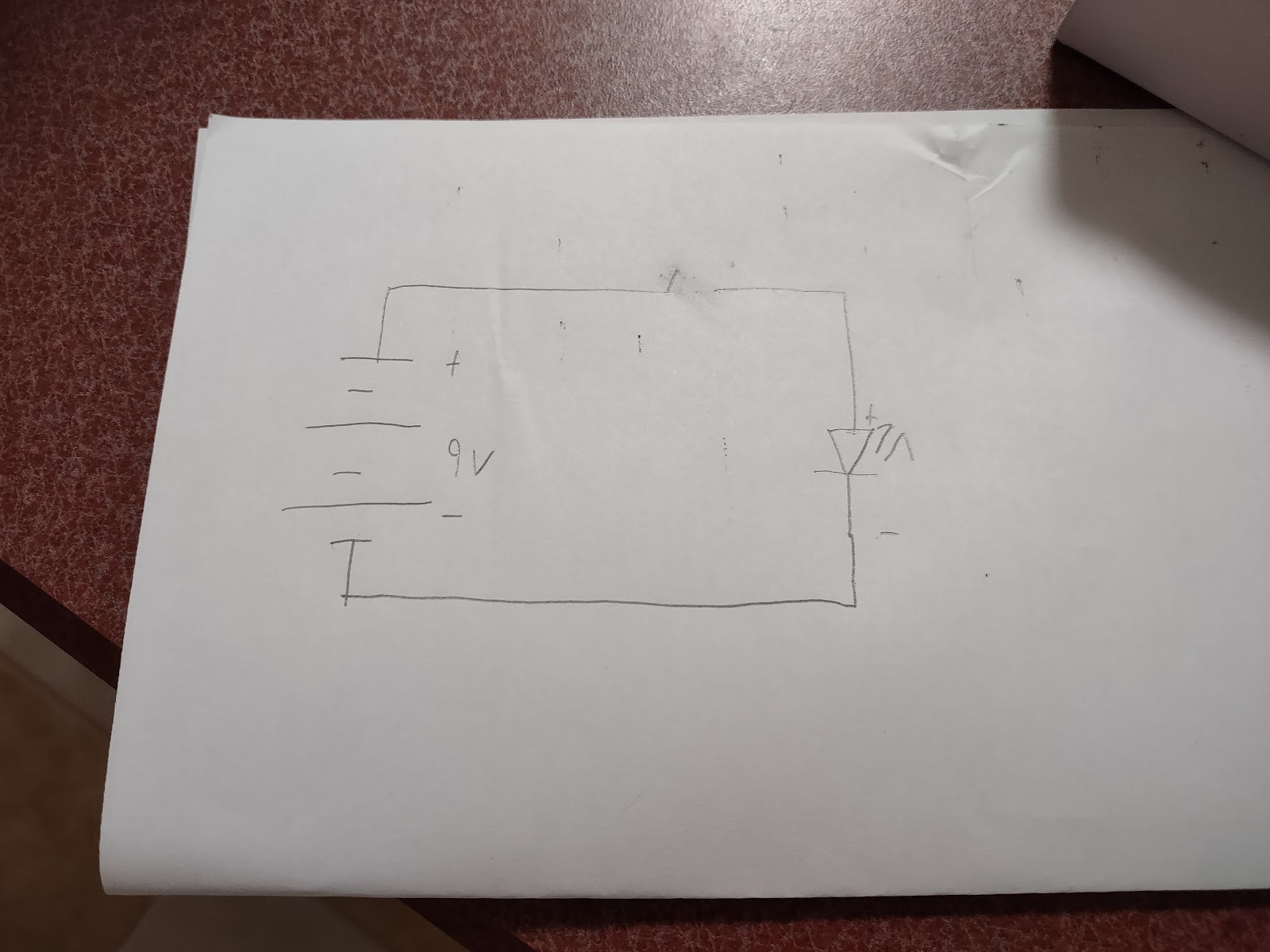
 Hello, our unconventional switch is a Fridge Door Switch. Its purpose is to remind you to close the fridge door after you open it. This switch is part of a breadboard powering a 2-volt red LED. We took two lengthy breadboard wires--which complete its circuit when they touch--affixed aluminum foil to their ends with conductive tape and then taped them to the side of a fridge so that the foil sticks out beyond the fridge door’s lip.

These conductors don’t ordinarily touch as they are taped separately. However, when the fridge door is closed, its stainless-steel exterior touches both pieces of foil, bridging the gap to complete the circuit.

The inspiration for this switch came from personal experience with a father that never remembered to close the fridge door. It would appear shut but still had a small gap in the door. Only when the fridge’s alarm, set off by a high temperature, went off would he notice his error. By this point however, damage had already been done to the fridge’s contents.

This switch is designed so that only when the door is properly closed, the breadboard’s LED turns on to confirm that fact. 


Schematic


Video Demonstration


Unconventional Switch: Speaker Switch (aka the Bass Meter)

So, we all listen to music. I think. And...

Things get loud sometimes, you know? As such, I wanted to see whether I could visually illustrate how loud an audio source was (such as my speakers) using a basic LED circuit. The power source is five volts from the Circuit Playground; I set up two 100 ohm resistors totaling 200 ohms; and used two more alligator clip wires (green for positive, yellow for negative in this case) to make a very loose connection with the aluminum foil. The default state of the LED is on, and if you were to sever that connection the LED would turn off. However, the fun part is that when I play a very loud, very bassy song on my speakers, the loosely affixed aluminum foil will shake and vibrate along with the speaker, creating visual fluctuations in the brightness of the LED. Should your LED be flickering heavily or flickering consistently, it serves as a visual cue to let you know how audible the audio is, and that should probably turn the source of it down.

Or just turn it up louder I guess. You're a kid in college, what do you care?

 
Photo of the switch.


Unconventional Switch: X-ACTO Knife

For our unconventional switch, we have created a circuit that lights a blue LED when an X-ACTO knife has its cap on. When you separate the knife from its cap, the LED turns off. As the cap is made of nonconductive plastic, we had to cover it in aluminum foil. We used a Circuit Playground Bluefruit with a USB as our power supply, making the power source 5V. We originally had a 220Ω resistor, but we had switched to a 100Ω one after finding the desired resistance for our switch circuit. The main idea behind the switch is to have the light shine to show you that the X-ACTO knife is safe and protected.


Unconventional Switch -- E14


Monster Can Switch    


Schematics for Unconventional Switch    


The switch that we ended up creating was attaching wires to two cans of energy drink and it will light up our LED when the cans touch each other. The metal surrounding the can is conductive, in fact if something went wrong, we could end up causing a shock but thankfully we were careful. The battery that we use to do make this project was a simple 9v batter that was connected to a power supply module, simple and common to use. We try on a 220hm resistor to see what could have happened with the results and it was a simple one.

 The cans were full when we did the experiment so we don’t know if they were empty the results would be different or the same, because once they touched each other electricity was conducted, and the LED was soon working. It depends on the amount of power that being circulated around the objects and the action that is going to happen to cause it, we did a simple and regular conjunction. The cans touched in a calm manner and not in a drastic manner that would have cause some kind of big effect to happen around the project.


Unconventional switch


            So for my Switch I tried my best to find two items that are not conductive and make them conductive. At the moment, there are these tiny plates with gold chocolate candies on them that my mom set up around the house for Chinese new year. I decided to make these the components of my switch. I wrapped the chocolate in aluminum foil and I also wrapped a portion of the plate with foil as well. Then I connected the chocolate to an alligator clip that is then connected to the breadboard. I do the same with the plate. Then when I set the chocolate onto the plate. The LED lights up.


05 February 2022

Unconventional Switch - Door


    For my unconventional switch, I wanted to solve the problem of not knowing whether or not your door is completely closed.  At my apartment me and my roommate's doors will sometimes not close all the way, so even if the door is locked the door can still be pushed open.  This is where this switch could come into play.  The LED in this circuit will turn on when the bolt of the door is fully seated inside of the faceplate of the doorframe where a magnet connected to a wire will latch onto it finishing the circuit, thus letting you know the door is secure and can not be opened if it is locked.  The circuit uses a 3.3V power supply that powers the 2V red LED, I used a 100 ohm resistor which is slightly higher than the ideal 65 ohms of resistance that this circuit could handle, to make sure that the LED will not break.

Scaffolding: Unconventional Switch - Lock & Key


Our design for the Unconventional Switch assignment is based on a lock and key. The 5-volt PSU sends power through the resistors, then the LED which remains off until the switch is on which allows easy toggling of the LED. The switch is the lock and key. The key is grounded and when it comes into contact with the lock, the circuit is complete which allows the LED to turn on. The LED light turns on if the key comes into contact with the lock but might start flickering because the current isn't strong enough. If you insert the key fully into the lock, the LED will remain lit. The LED is a signifier to tell if the key is fit inside the lock.